
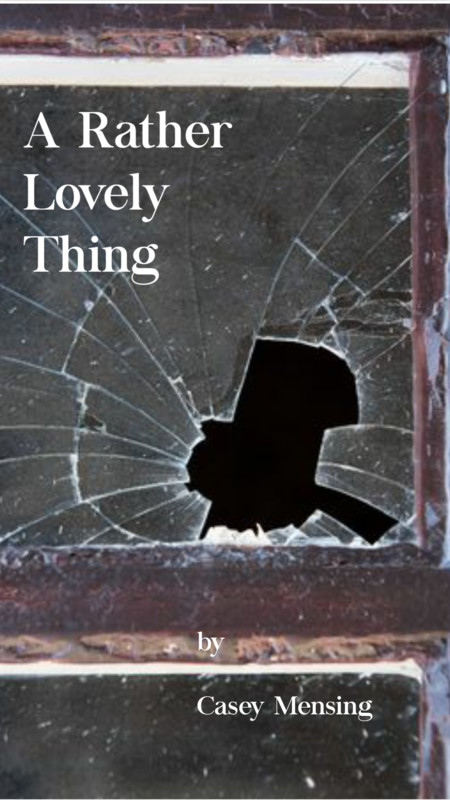
Casey Mensing’s screenplay “A Rather Lovely Thing” arrives as an unexpected gem—a meditative character study disguised as a period drama that asks us to reconsider what we label as madness.
Set in early 1900s Wisconsin, the script follows Mary Sweeny, a woman whose repeated acts of window-smashing across multiple states have made her both notorious and inexplicable to the communities she passes through. But Mensing isn’t interested in sensationalism. Instead, through the empathetic lens of newspaper editor Frank Cooper, the writer crafts an intimate exploration of a woman suffocating under the expectations of her era.
The screenplay’s greatest strength lies in its restraint. Mensing resists the urge to over-explain Mary’s motivations, allowing her contradictions to exist without judgment. She’s simultaneously a devoted mother mourning her lost children and a woman who chose freedom over maternal duty. She’s both victim—of head trauma, of an indifferent husband, of cocaine dependency—and agent of her own destiny.
The central relationship between Mary and Frank develops with surprising tenderness. Their jailhouse interview crackles with unspoken connection, two souls recognizing something ineffable in each other. Frank’s growing obsession feels earned rather than contrived, particularly in Mensing’s choice to frame the narrative through his impending death, giving the story an elegiac quality from its opening moments.
Visually, the script offers striking imagery. Mary’s perception of shattering glass—time slowing, shards suspended like dust clouds, the explosive sound bringing momentary peace—becomes a kind of poetry. These sequences could translate into breathtaking cinema in the right director’s hands.
The period setting provides rich texture without overwhelming the human story at its core. References to cocaine tooth drops, Caligraph typewriters, and the casual institutionalization of “difficult” women ground the piece in historical specificity while drawing uncomfortable parallels to contemporary issues around mental health, women’s autonomy, and societal conformity.
If there’s a weakness, it’s that Frank’s storyline occasionally feels underdeveloped compared to Mary’s. His deteriorating health and distant relationship with his wife Sarah hover at the margins without fully integrating into the emotional arc. The dream sequence framing device, while atmospheric, may prove challenging to execute without feeling heavy-handed.Still, Mensing demonstrates sophisticated craft throughout. The dialogue feels authentically period without becoming stilted, and the pacing allows breathing room for contemplation. Frank’s final article, which closes the script, serves as both eulogy and manifesto—a recognition that Mary’s “madness” might actually be the sanest response to an insane world.
“A Rather Lovely Thing” would require thoughtful casting and direction to fully realize its potential. Mary Sweeny needs an actor who can convey both steely defiance and devastating vulnerability, while Frank requires someone capable of portraying quiet intensity and moral complexity.This isn’t escapist entertainment or easy viewing. It’s a haunting meditation on the price of nonconformity, the violence inherent in being seen, and the ways we imprison those who refuse to fit prescribed roles. In an era increasingly examining historical narratives through fresh perspectives, Mensing’s script feels both timely and timeless—a rather lovely thing indeed.
Related Posts
Season: Feb to May, 2026: Trepidation — A Poignant First Step into Emotional Storytelling
Winner at the Clown International Film Festival in the Best…

Official Jury Review: When Life Gives You Lemons…Everyone’s Everest
Director: Tom McShane When Life Gives You Lemons… Everyone's Everest…

Official Jury Review — The Venetian Man
Written by Le’Roy Kester Winner in the Best Feature Screenplay…