
Camila Vinhas Itavo

To encounter the work of this Brazilian artist is to witness photography transformed into a form of resistance, memory, and profound listening. For over twenty-five years, this director has wielded the camera not merely as a recording device but as an instrument of social archaeology—unearthing voices that have been systematically silenced, documenting bodies and landscapes that carry the weight of centuries of erasure.The trajectory begins in 1995 with “The Newsboy Who Preferred the Radio,” an experimental documentary that already signaled a distinctive creative signature: the fusion of photography with the crackle and intimacy of PX radio, the communication lifeline of Brazilian truckers. This early work established a methodology that would define all subsequent projects—photography as dialogue, as conversation between media, between the visible and the audible, between presence and absence.What distinguishes this director’s approach is an unflinching commitment to what they call “the voice of the image.”
Their lens turns consistently toward Brazil’s marginalized communities: Indigenous peoples whose territories and cultures have faced violent appropriation across centuries, riverside communities (ribeirinhos) whose lives pulse with the rhythms of waterways, the natural world itself—rivers, forests, animals—granted agency and testimony through the photographic act. This is not merely documentary work; it is what the artist describes as “a cry,” photography elevated to the register of urgent witness.
The director’s classical ballet training—fourteen formative years from childhood through adolescence—provided an early education in the language of the body, in gesture as meaning-making. This foundation deepened through academic study at UNESP’s Photography and Social Communication program, then expanded dramatically during seven years at Estúdio Nova Dança in São Paulo, where they both studied and taught contemporary dance. This dual practice—photographer and dancer, observer and observed—infuses their work with a unique kinesthetic intelligence.
“Eu Rio” (2010) exemplifies this synthesis. Drawing inspiration from Masaru Emoto’s controversial but poetically resonant experiments with water consciousness, this multimedia performance weaves dance, music, poetry, and photography into a meditation on elemental connection. The work’s range is remarkable—performed for five-year-olds and presented at National Sanitation Forums alike—suggesting an art that refuses the artificial boundaries between aesthetic experience and civic engagement.The director’s time in northern India and subsequent residency with the Kamayurá people in Xingu National Park proved catalytic. These encounters sharpened their attention to gesture not merely as movement but as a complete system of communication, a carrier of cultural memory and cosmological understanding. The resulting exhibition “No Xingu há mais de 100 anos” (In Xingu for More Than 100 Years) demonstrates photography’s capacity to hold historical depth and present-tense vitality simultaneously.
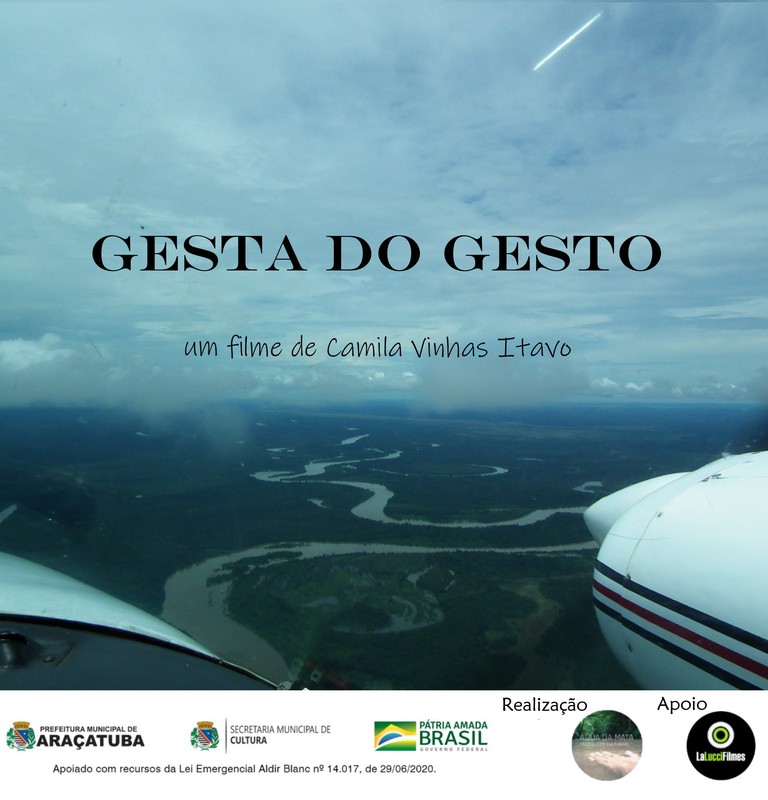
Perhaps the director’s most ambitious work is “Gesta do gesto” (Gesture of Gesture), a feature film six years in the making (2016-2022) that represents a radical proposition: an entire feature film shot not with cinema cameras but with still photography equipment, by a photographer who insisted on operating the camera themselves. This is authorial cinema in the most literal sense—every frame bearing the mark of a singular vision, a photographer’s eye applied to cinematic duration. The film meditates on cinema photography itself, on the relationship between stillness and motion, between the decisive moment and narrative flow.Central to this director’s practice is what they describe as photography as “the amalgam that sews dance research and gesture with social resistance movements.”
Their work consistently locates itself at intersections: between art and activism, between individual bodies and collective memory, between Brazil’s traumatic colonial history and its contested present. They understand that to photograph marginalized communities is to engage with questions of who gets to speak, who gets to be seen, whose stories enter the historical record.
The director has taught extensively—at Projeto Vocacional, São Paulo Cultural Center, Sesc Pompéia, and other institutions—suggesting a commitment to transmission, to ensuring that knowledge of both dance and visual documentation circulates beyond elite spaces. Their pedagogy, like their art, seems animated by a conviction that technique is inseparable from ethics, that how we look and how we move are fundamentally questions of how we relate to others and to the world.In an era of image saturation, when photography risks becoming merely decorative or distracting, this director insists on its power as testimony and transformation. Their camera doesn’t simply capture; it listens, it advocates, it preserves what governments and amnesia conspire to erase. Theirs is a photography that refuses neutrality, that embraces its capacity to “gain a voice,” to become what the artist calls “a force of the image.”
This is work that matters—not because it traffics in easy sentiment or spectacular imagery, but because it operates from a place of deep accountability: to Brazil’s Indigenous peoples, to its rivers and forests, to its teachers and researchers, to all those whose lives and knowledge constitute what the director beautifully terms “our immaterial heritage.” Through twenty-five years of sustained practice, they have created a body of work that is simultaneously intimate and expansive, locally rooted and formally innovative, bearing witness to what is and mourning what has been lost, while insisting—through every frame—on the possibility of seeing differently, of remembering more completely, of honoring what has been too long ignored.
Film
The Trace of Gesture
Related Posts
know OUR FILMMAKER
Alberto Perez-Crossland From the moment young Alberto Perez-Crossland watched Jurassic…